|
Tree lined streets, beautiful parks, colorful gardens. Living in Forest Hills Gardens means we have an arboretum right outside our own doors. Our neighborhood already boasts an unusual amount of biodiversity for a city, however, there’s more that we can do to support our local ecosystem.
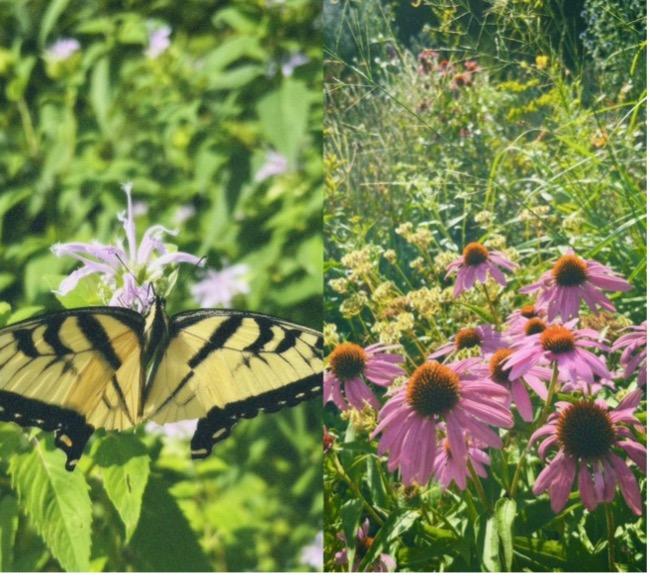
As seniors of Forest Hills High School, we have found through extensive research that pollinators are an essential part of a healthy ecosystem, yet one of the most threatened pillars of the environment. Pollinators, such as bees, birds, bats, and butterflies, support many flowers, fruits, vegetables, and nuts. In fact, as pollinator populations decrease, the price of produce tends to increase. That means that with a lack of pollinators, comes less access to healthy food, and therefore an impact on human health.
Although the parks and many yards in Forest Hills Gardens have beautiful sprawling green lawns and colorful annual flowers, these yards don’t necessarily support biodiversity or ecosystems.
So how can we protect the mighty pollinators? One important answer lies in the plants we choose to grow. Native plants (plants that naturally occur in a specific region) play an important role in supporting the pollinators that help keep local ecosystems healthy. Because native plants have evolved over thousands of years alongside local insects and animals, they provide the specific food and habitat these species need to survive. Even one plant in a yard or pot can help. Some native plants you can plant in Forest Hills Gardens include black eyed susans, cone flowers, aster, bee balm, goldenrod, azaleas, milkweed, eastern columbine, oak leaf hydrangeas, cardinal flowers, woodland phlox, wild bergamot, and more! (These are some of our favorites!)
We created the Bloom Project to engage our community in supporting pollinators and native plants in Forest Hills. Working with elementary school students at P.S. 101, campers at CITG Community House, and seniors at Atria Senior Living has been amazing to see how Forest Hills Gardens can come together to improve the world around us.
The next time you take a trip to your local plant nursery or go online, remember to consider the pollinators and go with some natives! You will end up with a beautiful yard, fluttering bees and butterflies, while contributing to a healthier local ecosystem! Be(e) a native plant gardener!
|